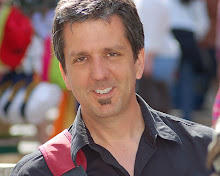
As promised, I went and spoke to the PEO group. And although they were too kind to say anything or admit it, I fumbled all over myself. What happened is that I started in on the breathing aspect of this idea/theory/mess, and realized (as a woman in the back of the room began to fall asleep) that they were bored, and I had no idea what I was saying. So I shifted gears and skipped directly to the part where I used Mozart as a way of describing what beauty is/was in music.
And I am realizing now that the larger problem here is that there are many directions this conversation has gone with the various people who have been part of it with me. So before I get back up in front of the public again and start to spout this stuff off before it is fully formed, I better have some time to put it all together in my own head.
Wednesday, February 11, 2009

Monday, February 2, 2009
I walked myself into a teaching corner...
Last summer, I was asked by someone to teach a short class to a PEO Women's group luncheon. I said yes, she said she needed a title. I said 'how about "A Different Way to Listen to Music". There you go.
Problem is, I can't remember what the hell I was thinking about doing when I said that! The class is tomorrow, and I for the life of me can't figure out what I'm going to tell these women. Anyway, I'm re-reading correspondence I had with a colleague on breathing/phrasing/spirit (which is much too complicated to encapsulate here) to see if it was something related to all of this. I kind of think it was, so I'm going to run with it. First, I'll try out in blog form...
The basic gist of the concept arose from a workshop I gave at a choir directors' conference a few years ago, and it went sort of like this: The essence of musical life, and the essence of singing, is breathing. A musical phrase has the same arc to it that breathing does: a moment of preparation, where life does not exist, followed by a life-giving fill of breath. Once the apex of the breath is reached, a slow recede begins, where the breath leaves the body, slowly and inexorably returning the lungs to their original state.
The genesis of my desire to expound on this idea was a conversation with a friend about how this "breath" can be found in all music: first, it appears in the musical phrase: a string of notes that has a rise and fall, ebb and flow. (As choral singers, we find it most clearly in the way we are called to sing the lines in Renaissance music.) Write large, it also appears in the artistic, narrative arc found in all works: symphonies, novels, plays.
The results of these conversations were many and varied, but some of the tangents I was most interested in included the following: in this model, since life is represented by inhalation, and death represented by exhalation, that means that every musical phrase is a representation of life and death. Furthermore, since everything we say or utter or give to the universe is done on the exhale, our act of speaking and singing itself is representative of dying. When we breathe in, we take from the universe. When we give to the universe, we are partaking in the act of dying. This makes Christ's death on the cross all the more profound, as perhaps the ultimate example one can give in human form of artistic gift.
All of this explosion of philosophical whimsy flew madly between myself and two or three friends, and then it stopped. Stopped on my end, because I had no idea what to do with it. So what? What does it mean?
I'm still not sure I know, but I can say this much today (with a deadline looming): it's time for me to tie this back into musical phrasing, at the very least to try and find a way to teach a class on "How to Listen to Music Differently."
* * * * * * *
So here goes: If this idea is true on any level, it means that a musical phrase that taps into our spirit is one that is basic to our existence. But that does not make a musical phrase beautiful. What makes a phrase beautiful seems to be simply what a phrase does with our expectations of what that phrase does. Beauty in music, as described by countless philosophers and aestheticians, is the act of expectation arrested. When a musical line introduces a slight alteration that we do not expect, it changes what the next expectation is. When Mozart introduces a simple, short dissonance into an otherwise flawless line, we are surprised, titillated. The next time he does it, we now find ourselves listening for beauty in a new way. (If I can find it, I'll put a brilliant quote on this topic by Maynard Solomon here - he says it far better than I can.)
Of course, our expectations are different when we listen to Mozart, or Sinatra, or U2, or at least they should be. And the person who uses one set of expectations to look for beauty in a different piece of music will surely be disappointed. But the process, I think, is the same. We look for the grass, and when we see a flower, we call it beautiful. That's not to say the grass is not beautiful - indeed, if we were walking through a field of tulips and came upon a well-manicured lawn in the middle of it, we would be just as pleased. It's the surprise - the splash of a new color - that makes the beauty.
It's the contrast in the breath that makes the art.
Wednesday, January 28, 2009
My next CD
Last night I finished the mixes of the thirteen tracks that will comprise my next CD, and I have to say, I'm very proud of these songs. One of the things that will be very different this time is that the songs will be unadorned - just me and a guitar, with guitar overdubs (solos) on two of the songs. That's it. No bass, no electric guitar, no drums, no keys, no background vocals, no hurdy-gurdy.
As much as I love fleshing out my songs with those ornaments, this time they will be bare. Most of the songs have been performed with combinations of instruments: guitar, cello, violin, vocals, mandolin. I could have recorded them in those states.
But I decided not to do that this time for a couple of reasons. First, and most obviously, this cuts down the cost of recording for me to almost zero. Second, I think of songs as framing. If I release these songs in bare format, everyone who listens knows exactly what the core of the song is. No bells or whistles or flutes to try and dress up a clinker. Either the song flies or it doesn't, and I have only myself as a songwriter to blame if it doesn't.
Finally, I decided I didn't want to wait for some recording opportunity to release these songs, or hold off until I had a wad of cash that would cover the cost of studio, producer, musicians. My 'back catalog' of unrecorded songs was getting long enough as it was. Indeed, two of these songs were written back in 2001 and 2002. There is a joy in these songs that I wanted to let loose. There is also the tale of a powerful love that weaves its way through many of them, my love for Lynda.
Last year, I thought about taking an extended break from performing. But with that thought process came the realization that "if I don't play these songs, who will?" And I got sad. Sad for these songs. As silly as it sounds, I feel like the work I create is a child of a sort. Once it grows up and moves out, it becomes its own being, able to affect and move people in different ways that I have no control over.
So, here are my new children (in alphabetical order), to be released later this spring to the world of listeners who care to listen:
As I Fall Away
Hold Tight to the Sky
Holding You in the Dark
I Remember You
Nobody Knows
One-Time Lover
Sailor
Simple and True
The Stars Sang a Song
Stranded Ghosts and Devil Dogs
Waiting on the Wind
Washing Away
You Were Leaving Anyway
Thursday, January 8, 2009
Apples and Oranges
The oversimplified version of a conversation yesterday in a meeting at church: It often seems this church is stuck between two models of what churches are supposed to do and act like, and I wonder if this isn't the problem that faces most mainstream churches these days?
Now the overcomplicated version: We, like many mainstream churches, have tried to operate the way we have for five hundred years, with a few modern influences. (Blogging, for instance.) We still have committees (renamed 'teams') that do the majority of the work of the church, and the work itself has changed very little. And yet we struggle to attract and keep members in the 20-40 age range, which means that eventually this church will, like so many of its neighbor churches, die.
This is not necessarily a bad thing, I suppose. There has got to be a Darwinian element to this that says that social organizations that cannot evolve with the times should die. Except that the social organizations that too often are taking their place are dogmatic, conservative, judgemental, factional. There has to be a place in this society still for a place of faithful searching for life's answers that is a liberal thinking outpost that rewards inquisitive thought, doesn't there?
So here then was the gist of the discussion - how do we, as a church, honor the old way of doing church business... 'apples', if you will ...while exploring what the liberal church should look like in the 21st century... 'oranges'? How do you make that shift from what is tried and true for the 50-year members of this church to what is needed and untested for the 20-year-old members? I sure don't know the answer, but I'm here to keep looking for it.
Tuesday, December 30, 2008
So why blog?
As I have ruminated over my first two posts, I have thought, "so what?" Why would anyone care about my thoughts about music or my Mom, or anything else for that matter?
Here is my question: is there anything that I have learned about music that may help other musicians, or people trying to seek some truth in music? My thoughts on this dwell in two areas: the things that I've studied a lot or taught on a lot. For instance, the importance of Beethoven's symphonies or Bach's fugues on Western civilization. The second area is the stuff that I can't quantify, haven't expressed with words, don't know quite how to say:
Why does music affect us the way it does?
What are the keys for a musician to be able to tap into the emotional power of music?
These are the things I think this blog is here for. This is what I'm going to use this blog to try and answer. I'm not a scientist, I'm not a psychologist. If you want a perspective from either of those places, read Oliver Sachs, or anyone else who has a better idea of the physiology of sound waves reaching the ear, or the psychology of how they affect the brain.
I'm a musician. I'm a musician with a particular insight (not unique to me) from my own experience into the spiritual nature of music and the soul. This is my starting place; this is the approach I will take in trying to open up hearts on these topics. I hope they give you something to think about, and I hope they provide something of interest.
Happy New Year!
Wednesday, December 24, 2008
Letter to a Young Musician
I recently wrote this to a gifted young musician:
First, I want to thank you for playing the Bach with us, playing in the orchestra, playing the postlude, for everything you do for the music here at Grace First.
Second, I want to say again how thrilled I am watching and hearing you become such a consummate musician. It's truly a joy to be around you and hear the work you are doing.
Finally, I've been thinking about something you said after the concert. I complimented you on our playing, and your first response was "I missed a lot of notes." Your comment (and a friend asking me this morning "what did you enjoy most about the concert?") got me thinking about why we get involved in music in the first place. (This might get long-winded, and I apologize in advance... I do that sometimes. :-)
My answer to my friend was two-fold. First, I told him that we musicians have all had that experience when everything 'clicks.' It's in tune, it's together, the timing is right, the musicianship can soar,... and when all of that happens, the distractions melt away, and we find ourselves in a place that is almost as close as we can come to touching our true souls, our true selves. It's in these moments that I think God is clearest to us, as musicians, and is why music plays such a central role in worship. And once we've been there once, it's like an addiction. We strive over and over again to recreate that moment - we are constantly working to improve our technique so that we can come closer to finding that feeling, every single time.
The second part of my answer to my friend is that the 'addiction' can be just as dangerous as any other addiction - we become so addicted to finding the technical purity that we lose the most important part of the equation: the unbridled joy that we feel making music. (Let's be honest: making good music is fun.) I know a lot of musicians who are so wrapped up in the pursuit of perfection that they lose the joy along the way. And as a result, they never really attain the perfection, because half of the equation for perfection in music is in releasing all of your inhibitions and just allowing the joy to take over!
OK - so enough metaphysical hoi-polloi. Here's my point: you are a technically superior musician for your age, by anybodies standards. You will only get better on that front. But let go of the idea that every note has to be perfectly in it's place for perfection to occur. Close your eyes more when you play. Learn the music by heart. (Isn't that a great thought? Learn the music by heart.) Enjoy the sounds, live in the vibrations of strings and learn that music - like life - is full of notes that are in tune, and notes that are slightly out of tune. And when you embrace that and find joy in creating music that is in that place, you will no longer be a violinist or a musician...
...you will have become an artist.
I know you will become just that, and I'm thrilled to hear what you will do in the years to come.
Merry Christmas, my friend,
Stan
Tuesday, December 23, 2008
Music and Mom
My mother loved music. My memories of her and music fall into two categories - the ones I have of her playing music (or encouraging it in me) when I was younger, and then the ones of my adult years, as I studied music and became a professional musician, composer, director, teacher. The two seemed to be separate memories entirely, of four different people: the person I was as a child and the man I am now; the mother I knew growing up and the mother that I have most recently in my memory - old, frail, dying even. But I now realize that the four distinct people in those memories are two people, perhaps even just one.
I know she sang in the church choir before my earliest memories of her. All Baptist church choirs: first in Wichita, KS, then Denver (where I was born and adopted), then in Fullerton, CA, where I grew up. But by the time I was five, she was a single divorced mother of one, we had left the Baptist church for good, and she never sang in a choir again. I'm not sure if she stopped singing because she associated it with a church she no longer connected with, or if it was some other life situation that took the joy away for her. We never talked about it, or I should say it never occurred to me to ask her.
I do remember, however, an organ, and later a piano. She played it some, though not often. She was not great. Her rhythm was suspect. She talked about having taken lessons when she was younger, and pulled out her old pieces from time to time, mostly just to see if she could still play them. I recall her father (my grandfather) bringing her near to tears one time by asking her to play "Claire de Lune" by Debussy, a piece that she could muddle through. The tears came, she told me later, because she hadn't known that he had even paid much attention to her playing as a young girl, and was shocked when he not only asked her to play his favorite piece of hers, but he named it.
At some point, probably about the age of 8, she bought one of the beginner piano books for me - Thompson, I think. She showed me a few things, and placed a key 'template' on the organ, a little paper cutout with the letter names of the keys that sat between the black keys. It was my first lesson in reading music. For a time, my Mom dated a man who had a daughter that was just a little older than I. She took lessons, and I think I learned as much from watching her play and leafing through her lessons books as I did from Mom. But I didn't have piano lessons until I was in college, and have never been much of a piano player.
I should add at this point that I have always wondered about my relationship to music and how much of it was nature and how much nurture. Given the musical talent in my adopted family, there was not much to watch or learn from musically. My Great Aunt Bill (Willie) played the piano some, but Mom seemed to have gotten her rhythmic gifts from her. My Aunt Mary (Dad's side) sang in the church choir (still does) and fostered music in her children. But that's about it. On the other hand, even an innate musical gift would have languished without encouragement.
And although she never said so directly, it's clear to me that at some point she must have recognized my musicality. Because every opportunity she had to foster, encourage, develop or train my muse she took. When I asked for a drum set, she got me one. When I asked for drum lessons, she paid for them. When my first five drum teachers all flamed out for one reason or another, she found me a sixth one. (We both realized that when teacher number 6 didn't show up for the lesson two weeks in a row that the universe was trying to tell us something.)
At the age of ten, our neighbor across the street cleaned out their garage and pulled down an old cheap Silvertone acoustic guitar and gave it to us. It was ugly - black with a tan sunburst on the front - and crap. One day, while trying to shake the pick out of the sound hole (the curse of every beginning guitarist) I put a six-inch long crack in the back of it. Shortly thereafter, my Mom bought me a lovely classical guitar, a nylon string Yamaha that lasted me into my first years of college. My love affair with the guitar had begun.
I have often been asked when I knew I wanted to be a musician. It's a question that stumps me, because it's never something I consciously chose. As soon as I started playing the guitar, I never looked back. Musical activities (choir, jazz, band, rock bands) took over all of my free time, and athletic ones took a back seat. I've thought in the years since then that I would probably be in better shape now had I played baseball in high school like I threatened to, or learned how to make a jump shot. But the truth is, those things have always felt like pursuits outside of my comfort zone, whereas music has been my home - it is who I am. Perhaps I left my adoptive mother behind at some point in those early years of studying music, as if music took over its rightful spot as my true parent and guardian. And if that is true, it explains much of the tension that existed between us as adults.
* * * * * * *
I think, on some level, my mother never really understood my relationship to music. Appreciated, yes. Admired, yes. Sponsored and supported, absolutely. But understood? She would often ask me questions about a composition of mine, and ask something like "where do you come up with the idea for something like that?" or "how do you think of which notes to use?" It's not a question that can really be answered, and anyone who writes music knows that. You can say something like, "well, it's mostly just about picking notes out of a scale that sound right and matching them together - you know, like Lego blocks!" Or go the philosophical route and say, "I don't really write the notes, they just kind of come through me. I'm more of a conduit."
But the truth is, I have no idea. I can't explain it. I can't explain what happens when notes all work, or why some combinations of notes produce certain reactions or emotions, and if I tried too hard to think about it, I think the magic would disappear. It would be like thinking so hard about how the car works that I'd never be able to get to the store. And I would tell her that, but she never was satisfied with that answer.
And I'm not saying this because her view is wrong and mine is right, it's just that I don't think she honestly understood what I meant. I say all of this because I think music is probably the one evidentiary reminder I have had my whole life that I was adopted. And that saved me on occasion. My Mother was a wonderful woman, but she was - as are all of us - flawed, afraid, unable to forgive herself for too much. And as an only child and, later on, and only adult child, there were many times when the weight of that emotional attention would have been debilitating...
...except that I had music. Music that I could escape into; music that I could wallow in, music that I could create and call my own creation for the world to hear, whether that be a performance or a composition. There was never a moment in my life when I didn't love my mother or wasn't grateful for all of the sacrifices she made for me. But there were times, too many times I am sad to admit, that I dove into my career as a way to establish in my mind that her neuroses were not my neuroses. It is, undoubtedly, my greatest failing as a son.
But in the end of her life, as her health faded and her days clicked off the calendar, there was one fact that helped her the most - she had raised a successful son who just happened to make music for a living. She truly was proud of me and my accomplishments. Her neighbors had all heard music of mine, and spoke at length about how she talked of me every time they came over.
When I was in Oregon after her death, taking care of the estate, I was making the rounds one day from place to place. In my errands, I went to her Savings and Loan to take care of some financial paperwork. I met one of the Account Execs, and proceeded to sit down and tell her what I needed. When she asked my mother's name, my response was greeted with "Oh, you must be Stan!" She then continued to tell me how much they knew of me and how proud my Mom had been. I blushed.
Since her death, I've been aware that she may have, indeed, not understood my music. But I also know now that it didn't matter. She understood it in the way only a mother could. I think she was most fond of my vocal music and my singing, maybe because she could relate to it from her days in the Baptist church choir. My guitar, which has always felt the most home for me, was of less interest to her, I think. It was when she heard my orchestral music, though, that the questions about "where does that music come from" always arose.
* * * * *
So what does all of this mean? Probably not much, except for two things. First and simplest, this Christmas I need to grieve my mother's death, and writing all of this out cathartically gives me the chance to do that.
Second, I am aware (partly out of trying to figure out ways to answer my mother's questions) that I have much to say about music and why it is what it is and why it does what it does. I've gotten much better at explaining it over the years. I have tried over the last few years to write more about music, to use what I think I know about it to inform some sort of book/article/epic poem about the muse.
I woke up last night realizing that I could kill two musical byrds with two rolling stones on this one and use my memories of my Mother as a starting place for all sorts of music musings and observations.
So, Mom, this blog's for you.
Oh, and I miss you very much. Merry Christmas.
Love, your son.
Subscribe to:
Posts (Atom)